June 9th, 2026
As an Astra Zeneca Global Breast Cancer Care Council Member and contributing author, I am pleased to share that the Improving Breast Cancer Outcomes Through Quality Care: Call to Action for the Implementation of the Breast Cancer Care Quality Index, has now been formally published in the International Journal of Environmental Research and Public Health, highlighting a global shift toward breast cancer strategies grounded in measurable quality, accountability across the care continuum, and health systems responsive to the lived realities of women everywhere.
Developed through multidisciplinary collaboration among clinicians, patient advocates, policy experts, and health system leaders, the BCCQI provides a practical framework to assess and strengthen breast cancer care across early detection, timely diagnosis, comprehensive management, and health system resilience. Its emphasis on patient navigation, referral coordination, workforce capacity, data systems, and patient-centred measurement is particularly critical for low and middle-income settings, where targeted system strengthening is essential to accelerate equitable progress toward the World Health Organization Global Breast Cancer Initiative targets.
At The Wellbeing Foundation Africa, these priorities shape our work to translate global policy into locally grounded programmatic action. Through the MamaCare360 program and our broader cancer engagement strategy, we advance patient-responsive care models and referral and care coordination pathways that strengthen community awareness and improve continuity of care across the cancer journey.
In parallel, The Wellbeing Foundation Africa was also pleased to recently support World Cancer Day activities in Nigeria alongside SAMBAI Patient Advocacy and TOUCH, The Black Breast Cancer Alliance, reinforcing the importance of community leadership, advocacy, and partnership in advancing cancer outcomes. This perspective publication, therefore, stands as both a technical roadmap and a shared responsibility to ensure that quality is systematically defined, measured, and delivered, so that no one is left behind.
November 21st, 2025
As a Member of the AstraZeneca Global Breast Cancer Care Council and the Concordia Leadership Council, I welcomed the publication of Repaying the Debt to Women: Breast Cancer Policy Report, developed following the Breast Cancer Care Luncheon at the 2025 Concordia Annual Summit, held alongside the 80th United Nations General Assembly High-Level Week, where I had the honour of contributing.
During the Luncheon, I participated as a panellist in the discussion on Repaying the Debt to Women: Advancing Equity in Breast Cancer Care and moderated the roundtable on The Road to a UN Breast Cancer Resolution, contributing perspectives on the structural inequities that continue to shape breast cancer detection, treatment, and survival.
The report translates these expert deliberations into actionable recommendations, including strengthening early detection and diagnostic capacity, expanding community-based screening, improving patient navigation and data systems, and advancing the Breast Cancer Care Quality Index (BCCQI) as an evidence-based framework for identifying gaps and strengthening national cancer strategies.
With breast cancer incidence projected to reach 3.2 million new cases annually by 2050, I am proud to have contributed to this important report and will continue advocating for its recommendations and the global collaboration required to advance equitable breast cancer care for every woman.
January 23rd, 2025
As a World Economic Forum Champion of the Global Alliance for Women’s Health and a direct contributor, I was honoured to welcome the launch of the Blueprint to Close the Women’s Health Gap: How to Improve Lives and Economies for All, developed by the World Economic Forum in collaboration with the McKinsey Health Institute.
I was privileged to contribute frontline and regional perspectives to this important body of work, building upon my engagement with earlier reports including Closing the Women’s Health Gap: A $1 Trillion Opportunity and Women Matter Africa.
The Blueprint provides a comprehensive framework for addressing the systemic inequalities that result in women globally spending 25% more of their lives in poor health than men. Through new metrics, evidence, and actionable strategies, it demonstrates that closing the women’s health gap could unlock $1 trillion in global GDP by 2040, while restoring millions of healthy life years.
I am proud to have contributed to this evolving global evidence base and, as a Champion of the Global Alliance for Women’s Health, to continue advancing its recommendations and strengthening the case for women’s health as an essential investment in healthier societies, stronger economies, and sustainable global prosperity.
January 17th, 2025
I welcomed the release of the Comprehensive Breast Cancer Policy Report, jointly developed by AstraZeneca and Concordia, to which I had the privilege of contributing directly as a Member of the AstraZeneca Global Breast Cancer Care Council.
During the 2024 Concordia Annual Summit, alongside the 79th United Nations General Assembly High-Level Week, I moderated the special First Ladies Luncheon on breast cancer and women’s health, bringing together world leaders, medical professionals, health advocates, and policymakers. The insights and recommendations emerging from this high-level dialogue contributed directly to the development of this important report.
The report sets out actionable pathways to improve breast cancer outcomes globally, with a focus on early detection, equitable access to quality care, effective patient navigation, and stronger accountability. Importantly, it also advocates for a global breast cancer policy dashboard to track progress, identify gaps, and support evidence-based action.
I am proud to have contributed to this important body of work and look forward to advancing its recommendations through the AstraZeneca Global Breast Cancer Care Council, strengthening global collaboration and accountability towards a future where breast cancer is no longer a death sentence.
February 27th, 2020
“Every Child Alive: Giving every child the right to life.” African Journal of Midwifery and Women’s Health, 12(2),
February 27th, 2020
Despite the frequency of stillbirths, the subsequent implications are overlooked and underappreciated. We present
findings from comprehensive, systematic literature reviews, and new analyses of published and unpublished data, to
establish the effect of stillbirth on parents, families, health-care providers, and societies worldwide.
February 23rd, 2020
Despite the frequency of stillbirths, the subsequent implications are overlooked and underappreciated. We present findings from comprehensive, systematic literature reviews, and new analyses of published and unpublished data, to establish the effect of stillbirth on parents, families, health-care providers, and societies worldwide.
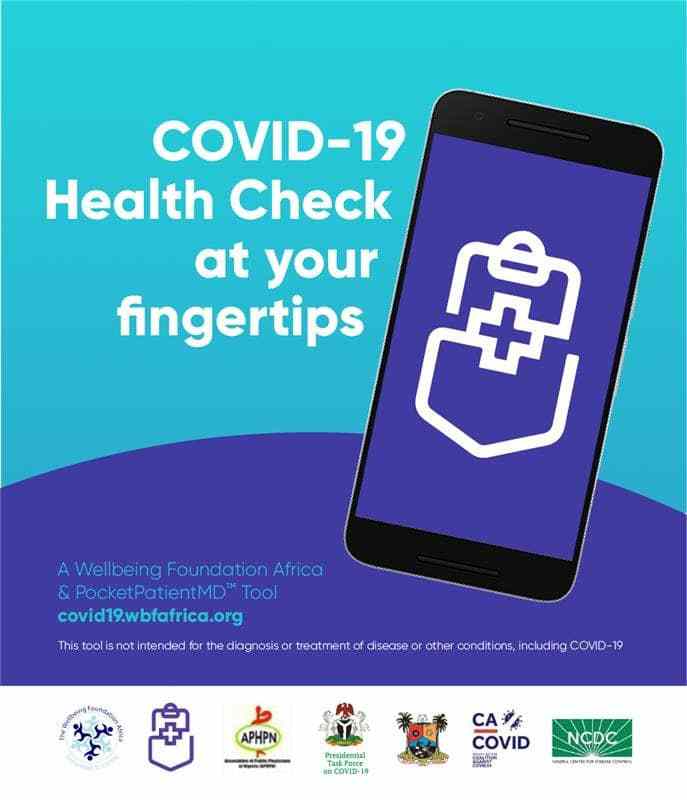
The e-health check tool is available for free at https://covid19.wbfafrica.org/ and users can access real-time updates on how to stay connected, safe, and healthy during the pandemic on Instagram and Twitter @Wellbeing_PPMD, and @WellbeingPPMD on Facebook.