Categories

On this International Day of the Midwife, under the 2026 theme One Million More Midwives, and as the International Confederation of Midwives Inaugural and Emeritus Global Goodwill Ambassador 2014–2021, I mark today in full recognition of the Wellbeing Foundation Africa’s commitment to midwifery-led care as the most evidence-based, cost-effective pathway to reducing maternal and newborn mortality in Nigeria and across the continent.
The World Health Organization’s Global Position Paper on Transitioning to Midwifery Models of Care, and the country experiences and policy system enablers shared at this morning’s WHO IDM 2026 Webinar, confirm that universal coverage of midwife-delivered interventions by 2035 could avert 67% of maternal deaths, 64% of neonatal deaths and 65% of stillbirths, saving an estimated 4.3 million lives annually. Sub-Saharan Africa accounts for approximately 70% of global maternal deaths, 46% of newborn deaths and 77% of stillbirths. WHO’s own data further establishes that poor-quality care causes more fatalities in low- and middle-income countries than lack of access itself, a finding that places Midwifery Models of Care, person-centred, continuity-based and integrated within functional interdisciplinary teams and networks of care, at the centre of Nigeria’s most urgent maternal health imperative.
Through WBFA’s MamaCare360 community and digital midwifery programme, we have observed first-hand how midwife-led, person-centred care delivered consistently across the antenatal, intrapartum and postnatal continuum drives community and behavioural change and produces measurably improved outcomes for women, newborns and families. Our WBFA Postpartum Mental Health Checklist is now embedded within Nigeria’s national Maternal and Child Health Handbook as a replicable model of integrated midwifery-led care delivery, a development that reflects the WHO’s definition of Midwifery Models of Care in which educated, licensed and regulated midwives autonomously provide and coordinate respectful high-quality care across their full scope of practice within collaborative interdisciplinary networks.
The regulatory, financing and workforce distribution constraints preventing Nigerian midwives from practising to their full scope remain our most urgent policy imperative. WBFA continues to address these through Continuing Professional Development training in Emergency Obstetric and Newborn Care, Perinatal Mental Health, Neonatal Jaundice Detection and Management through Project Oscar Light for Life, Breastfeeding and Lactation Support through NICU Plus, and Water, Sanitation and Hygiene in health care facilities to prevent and reduce maternal and newborn sepsis. The WHO Implementation Guidance on Midwifery Models of Care serves as our framework for accelerating that transition across Nigeria, anchoring our programming within the global evidence base and aligning frontline delivery with international standards of midwifery practice.
UNESCO’s inscription of midwifery knowledge, skills and practices on its Representative List of the Intangible Cultural Heritage of Humanity recognised the indispensable role of this profession in human health and society. Today I salute every midwife in Nigeria, across Africa and around the world. May governments and health systems meet the evidence with the investment, the regulation and the sustained political will that One Million More demands and that our mothers and newborns deserve.
Categories
Recent Posts
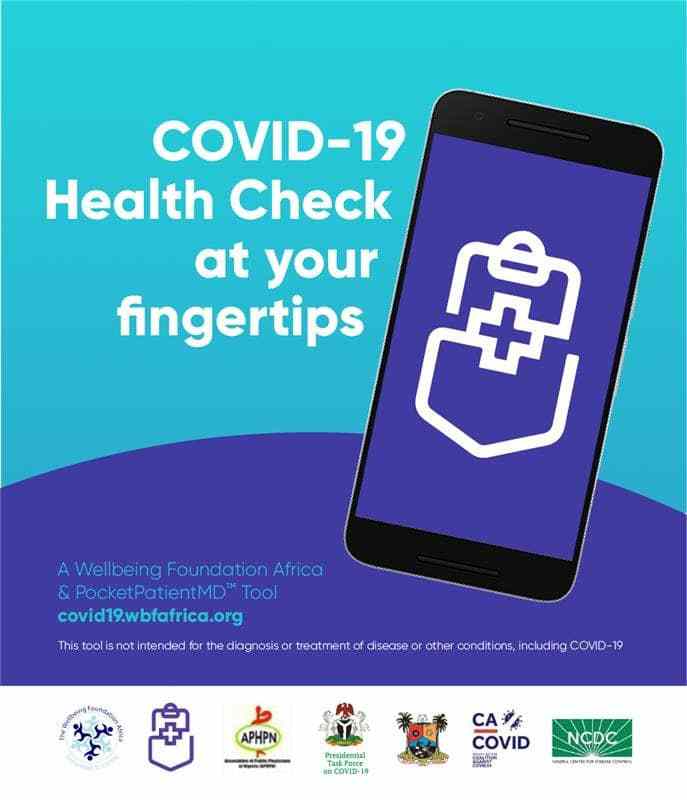
The e-health check tool is available for free at https://covid19.wbfafrica.org/ and users can access real-time updates on how to stay connected, safe, and healthy during the pandemic on Instagram and Twitter @Wellbeing_PPMD, and @WellbeingPPMD on Facebook.