Categories

H.E. Toyin Ojora Saraki, Founder-President, Wellbeing Foundation Africa Published in commemoration of the International Day of Sport for Development and Peace, 6 April 2026 Theme – Sport: Building Bridges, Breaking Barriers
On 6 April each year, the world pauses to acknowledge a truth that many communities already know, which is that sport, at its finest, is far more than competition. It is a meeting place, a classroom, a clinic, and a place of belonging. The United Nations designates this day the International Day of Sport for Development and Peace, and for 2026 the theme is one I hold with particular personal resonance, Sport: Building Bridges, Breaking Barriers, a phrase I have not merely observed from afar but have spent twenty years attempting to make real in the lives of young Nigerians.
The designation is a call to evidence. It asks every actor in the sport-for-development space, whether governments, foundations, civil society organisations or private patrons, to account for what they have actually built and for whom. This essay is my account, and it spans two decades of work by the Wellbeing Foundation Africa, the Alaafia Kwara initiative, and the broader community of partners with whom I have had the privilege of working, undertaken in Nigeria from 2004 to the present day.
When WBFA was founded in 2004, the global development community was organised around the Millennium Development Goals. MDG 3 called for gender equality and the empowerment of women. MDG 2 sought universal primary education. MDG 6 is centred on health and disease prevention. Sport was absent from the formal text of those goals, yet thoughtful practitioners recognised that it offered a practical and powerful entry point into all three, particularly in communities where formal institutions had not yet reached. In Kwara State, where WBFA first anchored its community programmes under the Alaafia Kwara initiative, the starting conditions were unambiguous, with limited sports infrastructure, minimal institutional support for women’s or girls’ athletics, and almost no provision for children with disabilities. This was a reality common across much of Nigeria. What followed over the next seven years was a steady, deliberate commitment to creating access where there was none, visibility where there was invisibility, and opportunity where the door had not yet opened.
The first and, to my mind, most consequential strand of this engagement was the inclusion of children with disabilities in structured physical activity. As early as 2004, WBFA began supporting the Kwara State School for Special Needs, providing a school bus to facilitate the physical attendance of children in remote or hard-to-reach areas and making contributions to improve the school’s facilities and the wellbeing of both children and their families. Recreation and play, understood as integral to holistic child development, were central to this engagement from the very beginning. By 2005, that work had deepened into structured sport. WBFA hosted the first sports workshop at the school for special needs and organised a national sports meeting in Kwara State for Special Olympics children from across Nigeria, with free medical screenings integrated into the sporting activities, reflecting the foundational conviction that sport and health are inseparable, above all when working with children who have disabilities. In 2007, engagement with Special Olympics Nigeria continued through participation in the Family Awareness and Demonstrative Sports event and the Road to China 2007 Farewell Reception, which honoured Nigerian Special Olympics athletes preparing for international competition, while WBFA also supported the commissioning of new facilities at the school in Ilorin. In 2009, participation in the Hope Games for the physically challenged and the Special Olympics North-Central Regional Games extended this thread further, with health screening again provided for participating children. Taken together, what this record represents is a sustained, multi-year commitment to the proposition that disability must preclude nothing, and that before the global community had formally named reduced inequalities or inclusive education as development imperatives, we were putting those principles into practice on a sports field in Ilorin.
The second strand of our MDG-era engagement was women’s football. During the Kwara State period of 2003 to 2011, WBFA supported the development of women’s football structures in the state, sustaining a female football team through patronage and institutional backing at a time when very few organisations were willing to do so. The context of that period must be stated clearly because in women’s football, context is everything. Women’s football in Nigeria at that time faced chronic underfunding, social resistance, and minimal institutional legitimacy. Creating a visible, competitive, state-associated women’s team was, in that environment, an act of genuine institutional courage. It said to every girl watching that women’s football in their state was organised, taken seriously, and worthy of recognition, and the contribution of that visible commitment to the broader culture of women’s participation in sport in Kwara continues to be felt today.
Alongside the football work, 2005 brought one of the most strategically significant interventions of the entire MDG era, which was WBFA’s founding financial contribution of one million naira toward the establishment of the Nigeria Netball Federation, and my subsequent appointment as Patron of Netball in Nigeria by the Federal Ministry of Sports. This was a role grounded in strategic conviction rather than ceremony. Girls’ sport in Nigeria required expansion beyond football, multiple pathways to participation were necessary, and netball, with its school-compatible format, minimal equipment requirements, and strong global network, was an ideal vehicle for that expansion. A decade later, in 2015, that initial investment bore visible fruit when WBFA partnered with Netball Nigeria and the Bringing Netball Back initiative to participate in an Introductory Netball Umpiring Course and a Charity Netball Tournament held at the Mobolaji Johnson Sports Centre in Lagos, facilitated by Hellen Manufor, Secretary of the Nigerian Netball Federation and herself a former England netball player. That work evolved further into NINJA’s Netball, Nigeria’s Intermediate Netball Junior Activities for Schools, a programme delivered in partnership with UNICEF and the Nigeria Netball Federation under the theme Build Teams and Change Lives, bringing structured, school-based netball to girls aged seven to twelve across the country. The resonance of that programme, seen in its full context, is considerable: a sport designed for girls’ empowerment, delivered through schools, supported by one of the world’s leading institutions for child welfare, rooted in a decade of patient foundational investment.
By 2011, when the most intensive phase of WBFA’s Kwara-based sports work drew to a close, the foundations were established. Women’s football had been given institutional visibility. Netball had been introduced as a national sport under WBFA’s patronage. Children with special needs had been given structured sporting opportunity, and Special Olympics Nigeria had been supported as a genuine national programme. These were investments in access, in visibility, and in the right of every young person to participate, and they anticipated by nearly a decade what the global community would eventually codify in the 2030 Agenda for Sustainable Development.
When the formal First Lady tenure came to a close, the question that follows any office-linked social programme was unavoidable, which is whether the work continues. Too often in Nigeria, community programmes tied to political office dissolve when the office changes. WBFA was built, from its founding, to resist that pattern. Between 2011 and 2015, the foundation’s sports engagement became less visible in formal reporting as WBFA’s primary focus deepened into maternal and newborn health, child rights, and education advocacy, but youth engagement through play, movement, and structured community activity remained woven into WBFA’s programming through the Alaafia Kwara initiative. The transition period carried a deeper significance, demonstrating that WBFA’s work in sport was grounded in civil society conviction rather than in political proximity. Institutions built on advocacy and purpose endure beyond the offices their founders happen to hold, and WBFA was designed precisely for that endurance.
In 2015, two developments occurred that would shape the decade to follow. The world adopted the Sustainable Development Goals, and within them, sport was formally recognised for the first time as an important enabler of sustainable development. The SDG era gave WBFA a more precise vocabulary for work that had been underway for over a decade, with SDG 3 capturing what we had always understood about sport as a physical and psychosocial health intervention, SDG 4 capturing the school-based engagement model pursued from the beginning, SDG 5 providing a global framework for the women’s football patronage and the netball investment built in Kwara, SDG 10 naming what the Special Olympics and special needs work had always been about, and SDG 17 describing the collaborative, multi-stakeholder model that had always underpinned our approach. The language was new. The work was not.
The most visible and sustained SDG-era sport-for-development initiative associated with my name is the Toyin Ojora-Saraki Baseball and Softball Championship, an independent, non-government initiative delivered in partnership with Double T Baseball and Softball Nigeria and the Nigeria Baseball and Softball Association. The first major championship was held in Ilorin, Kwara State in 2018, at the Adewale Park, bringing together over one thousand athletes from fifteen states across Nigeria, competing at both Under-18 and senior levels, with free feeding, accommodation and local transportation provided for all young participants, reflecting a full athlete welfare model. The stated objectives of the organising body were unambiguous, encompassing the discouragement of youths from social vices, the development of young talent across secondary schools, and the identification of athletes for national teams ahead of the All Africa Games, the Olympic Games, and other international competitions. Baseball and softball are, in Nigeria, emerging disciplines, and by attaching my name and patronage to them, the intention was to diversify opportunity, to create pathways into organised, internationally recognised competition for young people who might never have participated in football or athletics. Softball, in particular, offers a lower barrier of entry for girls and a strong school-community interface, making it a natural vehicle for gender inclusion. Subsequent years have seen continued expansion and talent development, with the Adewale Baseball Park in Ilorin, reportedly among the finest baseball facilities on the continent, serving as a permanent home for the sport in Kwara State and cementing Ilorin’s position as a centre of Nigerian baseball and softball development.
In 2019 and the years following, WBFA has participated in the World Health Organisation’s Walk the Talk physical activity initiative, linking sport directly to its primary advocacy domain of health systems strengthening and reflecting a mature understanding that in a public health context, the most significant dimension of sport is frequently the daily commitment to movement, to the body, and to prevention rather than elite competition. As Nigeria confronts a growing burden of non-communicable disease and as the mental health consequences of sedentary urban life become more visible, the integration of physical activity advocacy into WBFA’s health work carries increasing policy significance.
At the United Nations General Assembly in September 2023, I had the honour of joining H.E. Amina J. Mohammed, UN Deputy Secretary-General, Roger Federer, Founder and Board President of the Roger Federer Foundation, Laura Frigenti, Chief Executive of the Global Partnership for Education, Catherine Russell, Executive Director of UNICEF, and representatives of the Heads of State of Kenya and Switzerland, on the high-level panel Investing in Education Systems for Sustainable Development and Children’s Wellbeing, co-hosted by the Global Partnership for Education, the Roger Federer Foundation, the Government of Kenya, and UNICEF. That convening brought together UN Member States, multilateral bodies, civil society organisations, private foundations, and youth movements in a shared examination of the political will and systemic investment required to advance SDG 4, and it gave powerful global expression to something I have believed throughout two decades of work in Nigeria, which is that investing in children’s education is the single most consequential equaliser available to any society, and that sport, when embedded within school systems with intention and resource, is among the most effective tools for keeping children, particularly girls, within that system. The evidence is robust that school-based sports programmes improve attendance, engagement, and retention, above all in contexts where social and cultural pressures make formal education feel remote or inaccessible, and that reality sat at the heart of every initiative WBFA had pursued from its earliest days in Kwara State.
At UNGA 2024, on the margins of the Summit of the Future, I continued that advocacy in dialogue aligned with Education for All priorities, contributing to international conversations on the intersection of youth development, educational access, and sport as a cross-cutting enabler of both, reinforcing to a global audience what two decades of frontline experience in Nigeria had already made plain, which is that the bridge between sport and education is not a peripheral concern but a central one, and that no credible sport-for-development framework can afford to treat the two as separate domains.
Across twenty years, one pattern recurs without exception, which is that sport, when embedded within a broader development architecture, functions as a multiplier. It is most powerful when connected simultaneously to health, education, gender equality, and community cohesion rather than when treated as a standalone sector. Every initiative described in this account was designed with multiple development objectives in view. A second pattern is equally consistent, which is that inclusion requires deliberate design from the beginning. Girls, children with disabilities, and young people in underserved communities do not find their way into sport through benign neglect. They require specific attention, structural accommodation, and visible champions. The role that patronage, institutional backing, and First Lady-linked visibility played in normalising women’s sport in Kwara in the early 2000s was real and measurable because visibility shapes norms, norms shape behaviour, and behaviour sustained over time shapes culture. A third pattern carries perhaps the most significant policy implication, which is that development impact demands continuity beyond political cycles. The transition from MDG-era programmes to independent, civil-society-led SDG-era initiatives was a deliberate institutional design choice built into WBFA from its founding, ensuring that the work continues regardless of the political weather. The deliberate diversification of sport pathways, from football to netball, from netball to baseball and softball, from able-bodied athletics to Para sport and Special Olympics, reflects a considered understanding that concentration is fragile and that expanding pathways expands the number of young Nigerians who can find their place in organised sport, regardless of gender, ability, or geography.
This year, the United Nations chose a theme for the International Day of Sport for Development and Peace that captures precisely what twenty years of this work has taught me. Bridges are built slowly. They require foundations, engineering, sustained investment, and above all, the belief that the distance between where people are and where they could be is worth crossing. For twenty years, sport has been one of WBFA’s bridges, connecting girls to competition, children with special needs to community, underserved youth in Ilorin to national talent pipelines, and Nigeria to the global movement of sport for development and peace. The barriers we have broken are concrete realities rather than abstractions. They are the socio-cultural barriers that once told girls in Kwara that football was a space reserved for others, the institutional barriers that left children with disabilities without any structured physical outlet, and the geographic barriers that meant a gifted young baseball player in a secondary school in the North-Central had no competitive pathway and no one to tell them that one could exist.
We are far from finished. The bridges are still being built. As International Day of Sport for Development and Peace is commemorated, I am proud to account for what has been constructed, because we built, we documented, we sustained, and we did so in the belief that when you give any child a ball, a field, a coach, a competition, and a crowd that cheers their name, you give them something greater than sport. You give them the dignity of participation, and that changes everything.
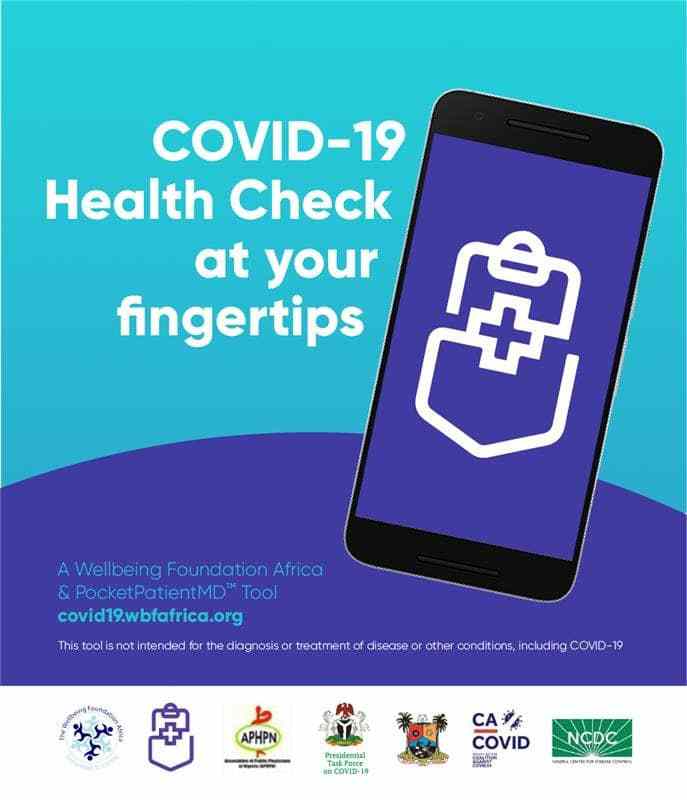
The e-health check tool is available for free at https://covid19.wbfafrica.org/ and users can access real-time updates on how to stay connected, safe, and healthy during the pandemic on Instagram and Twitter @Wellbeing_PPMD, and @WellbeingPPMD on Facebook.