Categories
I welcome World Breastfeeding Week 2026, observed from 1 to 7 August under the theme Breastfeeding for a Sustainable Start in Life: Strengthen What Works, coordinated by the World Alliance for Breastfeeding Action with the World Health Organization and UNICEF, and anchored this year in tracking progress across nutrition, food security and poverty reduction.
The week opens with the updated global investment case ‘Investing in Breastfeeding Saves Lives and Money’ released by the Global Breastfeeding Collective, commissioned by WHO and UNICEF and produced by Nutrition International. It finds that scaling proven breastfeeding support to 75 per cent coverage in high-burden countries over the coming decade would avert between 224,000 and 263,000 child deaths and generate between US$276 and US$357 billion in economic gains, delivering returns of up to US$59 for every US$1 invested, driven largely by improvements in cognitive development, education outcomes and lifetime productivity. The cost of continued underinvestment is measured with equal precision, at US$339 billion in losses each year, alongside 383,000 avoidable child deaths, 138,000 avoidable maternal deaths, 58 million lost years of education and 168 million unrealised IQ points.
In Nigeria, exclusive breastfeeding has stagnated at 29 per cent, early initiation within the first hour has declined from 42 to 36 per cent, and twelve of our thirty six states and the Federal Capital Territory provide six months of paid maternity leave, according to the National Demographic and Health Survey 2023 to 2024. I take the view that the gap before us is one of financing, accountability and enforcement rather than of evidence, which is why the midwives and nurses of the Wellbeing Foundation Africa continue to deliver skilled infant and young child feeding counselling through the WBFA MamaCare360 antenatal and postnatal classes, across the continuum of care and in the communities where such counselling is least available and most needed.
My hope for this week, which is to close the distance between declaration and delivery, rests on the six priorities set out by the Collective. To protect through full enforcement of the International Code of Marketing of Breastmilk Substitutes and expanded maternity protection, to deliver through Baby Friendly Hospitals and skilled counselling, to enable through families, fathers and communities, to finance through predictable and sustained domestic investment, to scale through comprehensive national packages, and to partner, because no single actor can close the breastfeeding investment gap alone.
Categories
Recent Posts
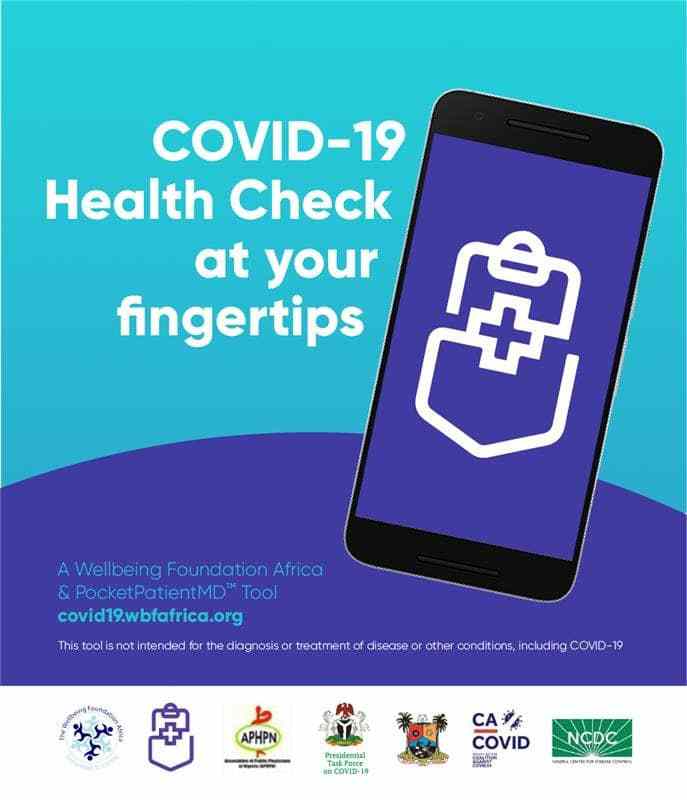
The e-health check tool is available for free at https://covid19.wbfafrica.org/ and users can access real-time updates on how to stay connected, safe, and healthy during the pandemic on Instagram and Twitter @Wellbeing_PPMD, and @WellbeingPPMD on Facebook.