Categories
I was glad to contribute to the high-level roundtable on Promoting Global Action on Childhood-Onset Heart Disease to Advance Child Health and Survival, hosted by Children’s HeartLink, the Ministry of Health, Namibia, GE HealthCare Foundation, Siemens Healthineers and the Business Council for International Understanding on the margins of the WHO’s 79th World Health Assembly in Geneva.
Congenital heart disease affects approximately 1 in 100 live births, with an estimated 1.35 million babies born each year with the condition, one in four of whom requires cardiac surgery within the first year of life to survive. Up to 90% of children born with CHD in low- and middle-income countries still lack access to essential cardiac care, while 85% of CHD-related deaths in infancy occur in those same settings. Rheumatic heart disease compounds this further, remaining entirely preventable yet endemic across much of sub-Saharan Africa, where an estimated 1.5 to 3% of school-aged children are affected and where it remains the leading cause of acquired heart disease in children and young adults.
The roundtable convened governments, multilateral institutions, clinical partners and the private sector around a specific and urgent objective, building the political foundations for a dedicated WHA resolution on childhood-onset heart disease that would elevate it as a global health priority, catalyse national action on early detection, treatment and long-term care, and integrate it meaningfully into UHC benefit packages and child health strategies where it has for too long been absent.
The Wellbeing Foundation Africa’s work on maternal and newborn health in Nigeria sits in direct relationship with this agenda. A child born with an undetected congenital heart condition to a mother who survives childbirth through better antenatal care represents a continuum of preventable loss that demands a continuum of political attention, clinical investment, and community-level detection capacity.
Categories
Recent Posts
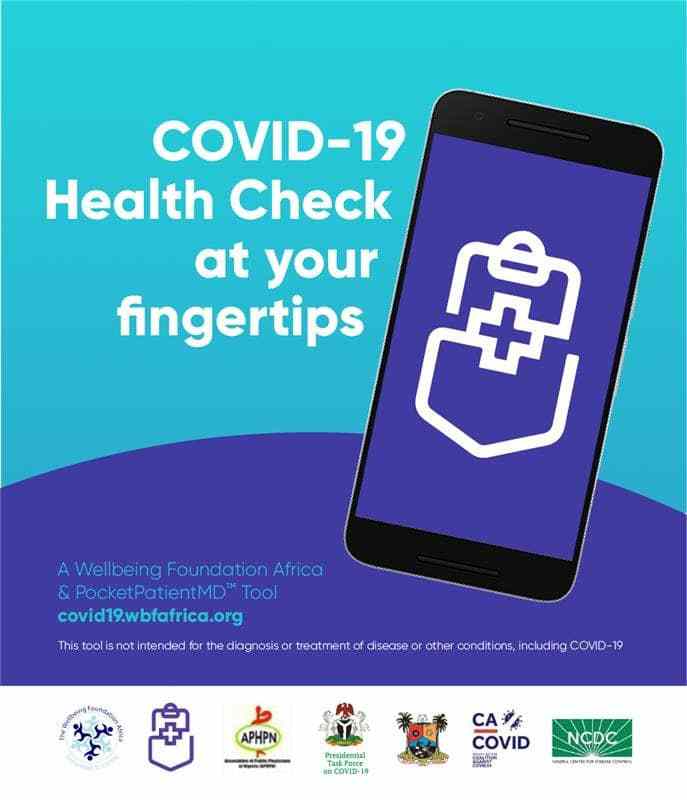
The e-health check tool is available for free at https://covid19.wbfafrica.org/ and users can access real-time updates on how to stay connected, safe, and healthy during the pandemic on Instagram and Twitter @Wellbeing_PPMD, and @WellbeingPPMD on Facebook.